Saturn, The Elder: When Saturn Leads Your Chart
Your Sun sign is not your lead planet, and Capricorn, the sign Saturn rules, makes the case well. We ran six famous Capricorn Suns through PathFinder: Elvis Presley, Jim Carrey, Richard Nixon, Marlene Dietrich, Louis Pasteur and Dolly Parton. None of them came out Saturn-led. Elvis, Nixon and Dietrich are The Messenger. Pasteur and Parton are The Aesthete. Carrey is The Big Thinker, a pair archetype where two planets share the lead.
Now take the four people in this article who are Saturn-led. One has the Sun in Virgo, two have it in Taurus, and only one, David Bowie, is a Capricorn. Which planet shapes a chart most depends on where it sits and what it touches. Your birth month has little to do with it.
This is the first article in a series on the Archetype of Realization, taking one planet at a time. We start with Saturn, whose archetype we call The Elder.
What an Archetype of Realization is
PathFinder reads every chart through four points first: the Sun, the Moon, the Ascendant and the Midheaven. We call them the Four Primaries. Each of the ten planets gets a score for how strongly it connects to those four, and five signals count toward it: an aspect to one of the Primaries within 10°; ruling the sign a Primary sits in; essential dignity, meaning how comfortable the planet is in its own sign; sitting in an angular or succedent house; and a synergy bonus when one planet ties into more than one Primary. The planet with the highest score is your dominant planet, and it gives your archetype its name. If the second planet lands within 10 percent of the first, the two share the lead and you get a pair archetype instead.
The Primary your dominant planet connects to most strongly is its connection point. It changes how the archetype is lived, while the name stays the same. A separate label, Known For, answers a different question: which planet sat highest in the sky when you were born. That one needs a birth time. Roughly, the Archetype says what drives you, and Known For is closer to what other people notice first.
Saturn's archetype is The Elder. Its principle in the app reads: structure, responsibility, mastery, and earned authority.
Where The Elder comes from
The Roman Saturn was a god of sowing and the harvest, identified with the Greek Titan Kronos, and the myths give him two faces. Kronos takes power from his father with a sickle, then swallows his own children so none of them can do the same to him. In the Roman telling, Saturn rules over a golden age of plenty that later generations remembered with longing. The figure carries both from the start: a strict ruler afraid of loss, and the keeper of an order people missed.
Astrology inherited the strict side first. Ptolemy, writing in the second century, says it is Saturn's quality "chiefly to cool and, moderately, to dry", and he groups Saturn with Mars as the two planets whose effects run against growth (Tetrabiblos I.4–5). Later tradition called Saturn the "greater malefic". We don't use that label. It describes how Saturn felt to people who met it as delay, scarcity and old age, and it says little about what a person can build with it.
The Renaissance added a second reading. Marsilio Ficino, in his Three Books on Life (1489), wrote that scholars are prone to melancholy and live under Saturn's ambivalent pull, and that the weight can be managed rather than simply suffered (overview). The planet that brought gloom was also the planet of deep, patient thought.
In 1976 the astrologer Liz Greene published Saturn: A New Look at an Old Devil. The title signals the shift. In her reading Saturn is no longer the villain of the chart. It is the place where you feel unready, and where steady work slowly builds real authority. Psychology had a parallel image. Jungian writers describe the senex, the old man, as the archetype of order, tradition and authority, paired with the puer, the eternal youth. James Hillman tied the senex directly to Saturn in Senex & Puer.
So the history keeps both sides. The classical texts called Saturn harmful. The modern reading, which we share, is about responsibility, mastery and authority that is earned rather than handed over. The weight comes first, and what you build with it comes after.
How The Elder shows up
The idea is old. In the second century, Ptolemy's Tetrabiblos (Book IV, the chapter "Of the Quality of Action") finds a person's "lord of action" from two places: the planet at the Midheaven, and the planet that rises close to the Sun. The oldest version already looked at the Midheaven and the Sun, and never said "job".
The Elder's gift is follow-through: patience, reliability, the ability to build something that lasts. Its cost is that it often carries weight early and can feel never quite ready. Where it shows depends on the connection point.
The Ascendant is the coat you were born wearing. People see its cut and colour before you say hello: your body, your pace, your face at rest, your reflexes. Many older writers treated it as a mask worn over the real person. We choose the other reading, a mask that is the face.
The Midheaven is the name on the town's lips, the sentence people say about you when you're not in the room. It's your reputation and standing, the role your community gives you and you grow into. In the app the label reads "Career and public role", and career is one expression of it. Think of the grandmother whose door the whole street knocks on, the parent the other parents ask about school forms, or the student known as the one who started the debate club. A public role in a small public still counts.
The Sun is the voice you hear when you talk to yourself. It's the self you recognise from the inside and feed on purpose, through what you make and what you choose. People see it when you're being yourself, much less when you're being introduced. The Sun is how you recognise yourself; the Midheaven is how others recognise you.
The Moon, for contrast, is felt in private and seen only in intimacy.
Through the Ascendant, The Elder is a composed, serious presence people read as dependable before you speak. Through the Midheaven, you're known for standards and for keeping things in order. Through the Sun, you choose responsibility and craft and build yourself slowly. Through the Moon, it's a private need for steadiness that outsiders may never see.
At a family wedding, her cousins notice her quick stride before she says hello; that's the Ascendant. An aunt introduces her as the one who sorted Grandad's care when nobody else could, which is the Midheaven. Late in the evening she slips off to sketch the dance floor, because that's how she makes sense of a day. That's her Sun. During the vows she cries, and only her partner sees it: the Moon.
In public, through the Ascendant and Midheaven, The Elder looks like composure and standing. In private, through the Sun and Moon, it's a rule you keep when nobody is checking, visible only when you're being yourself.
Four charts where Saturn leads
Each chart below was computed with PathFinder's own dominance code, using birth times from Astro-Databank. In every case Saturn leads clearly, with no near tie and no second planet sharing the lead.
Michael Jackson: The Elder through the Midheaven
Saturn sits almost exactly on the Midheaven, less than half a degree away, in Sagittarius. It also squares the Moon. His Sun is in Virgo, his Moon and Ascendant in Pisces. The connection point is the Midheaven, so The Elder lives in his public image and standing, and his Known For is Saturn as well: Discipline and Reliability.
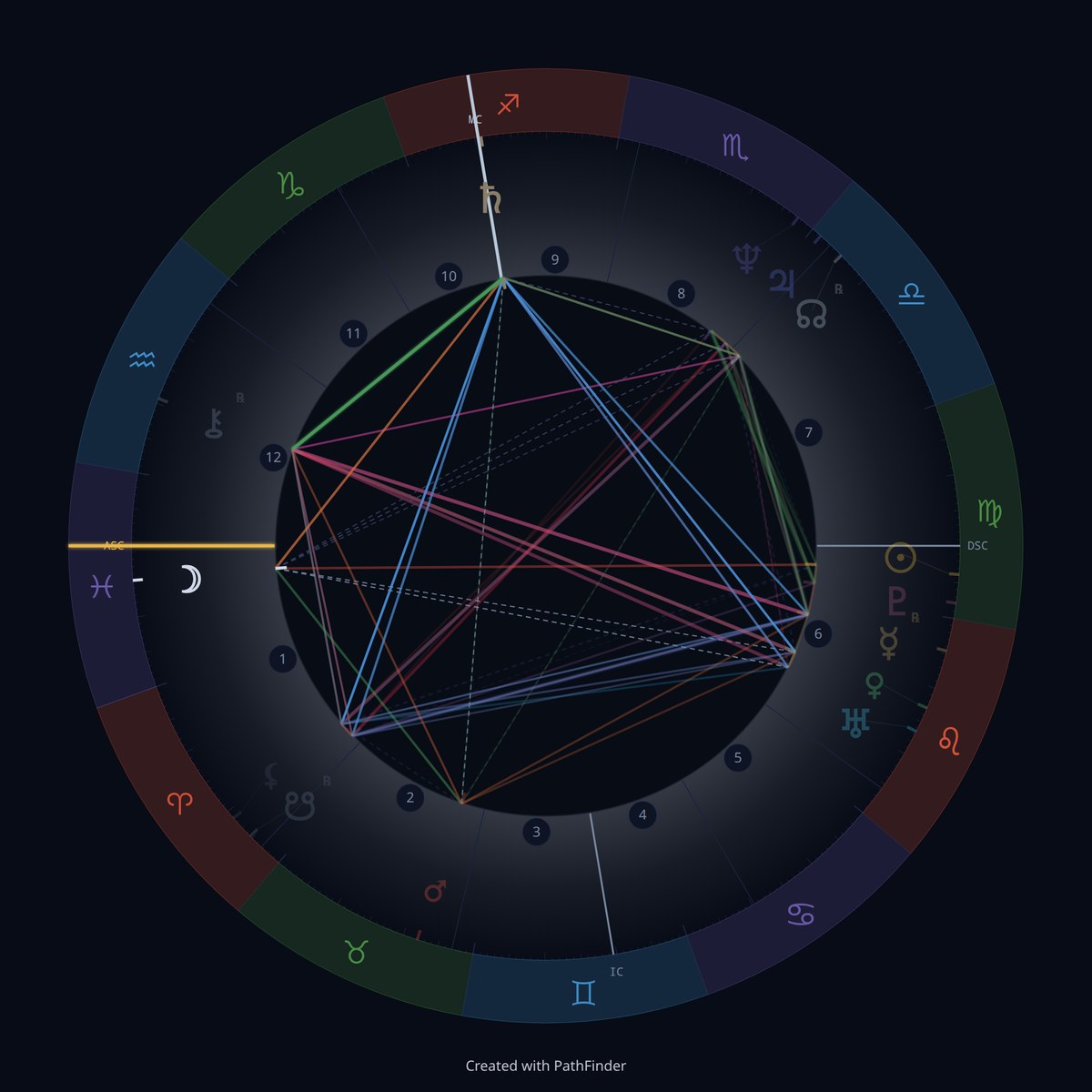
The life fits the geometry closely. He was performing from the age of six, grew up without much of a normal childhood, and was known for rehearsing until a piece was exact. The public saw the spectacle. Underneath it was Saturn: years of repetition, and standards he held himself to.
Queen Elizabeth II: The Elder through the Midheaven
Saturn in Scorpio is conjunct the Midheaven, about a degree away, and Saturn also rules her Capricorn Ascendant. Her Sun is in Taurus, her Moon in Leo. The connection point is again the Midheaven, and hers is the clearest case of a Midheaven that isn't a job: a role and a standing, held for a lifetime. Her Known For is Neptune, Imagination and Sensitivity.
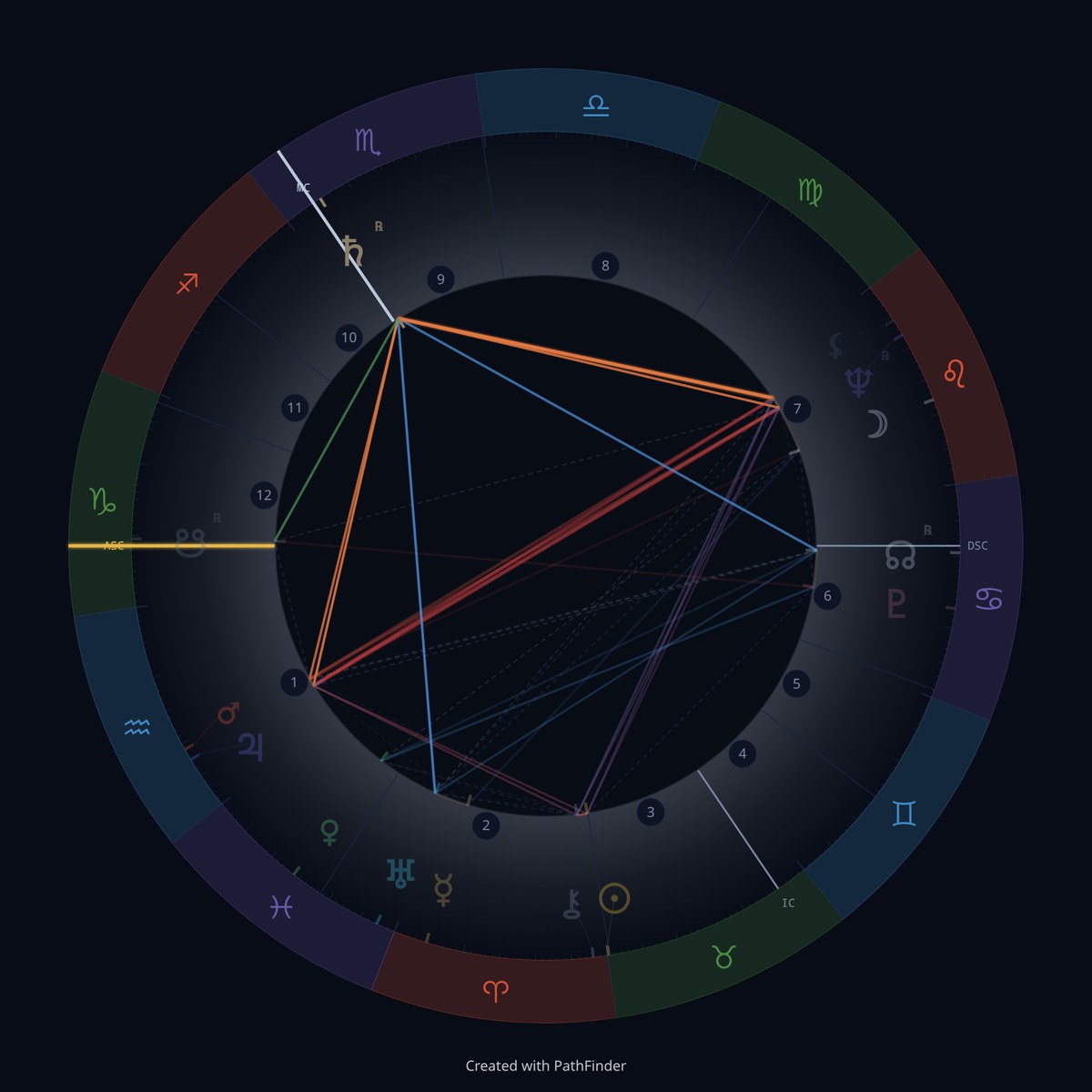
"Duty" is the obvious word for a seventy-year reign, and it's the right one. Her Astro-Databank biography notes she was taught to act as a royal from the age of two and describes her as polite, responsible and well-mannered. That is The Elder in its plainest public form. Neptune as Known For fits as well: people saw the symbol, and she did the work.
Al Pacino: The Elder through the Sun
Saturn in Taurus is conjunct his Sun, within a degree, and squares his Leo Ascendant within half a degree. The connection point is the Sun, so The Elder shows when he is being himself, in conscious creative expression. His Known For is Saturn: Discipline and Reliability.
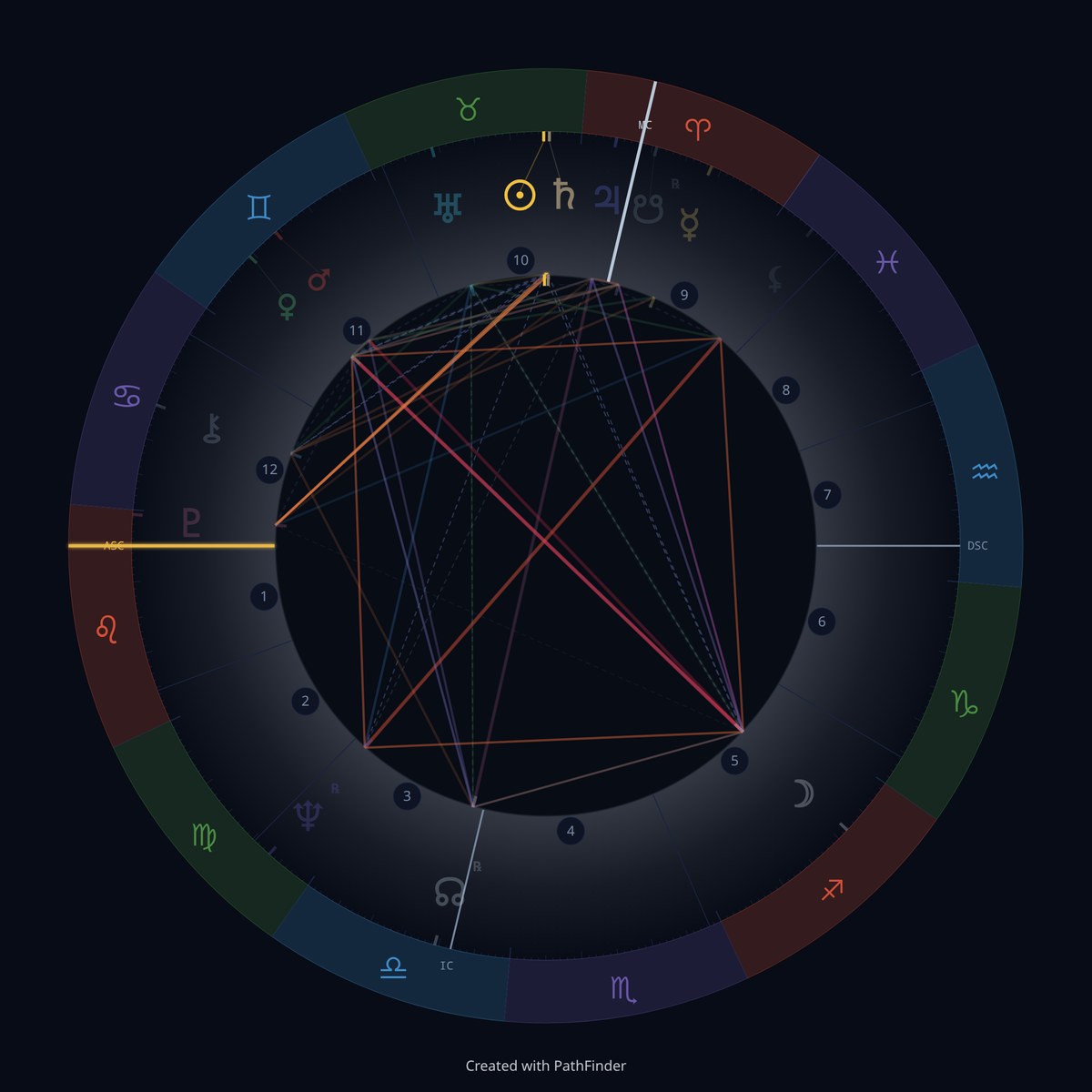
At seventeen he left school to help support his mother. Decades of steady craft later he had won the Triple Crown of Acting, an Oscar, Emmys and Tonys. For all the tough-guy roles, his biography describes a private, shy man. Through the Sun, The Elder looks like this: authority built through the work itself, and a self he keeps quietly in his own hands.
David Bowie: The Elder through the Moon
Saturn in Leo opposes his Aquarius Ascendant and, in the traditional scheme, rules it. It also sits about three degrees from his Moon. Leo is Saturn's sign of detriment, where it is classically uncomfortable. His Sun is in Capricorn, which makes him the only Capricorn of the four. The connection point is the Moon: private emotional life. His Known For is Neptune, Imagination and Sensitivity.
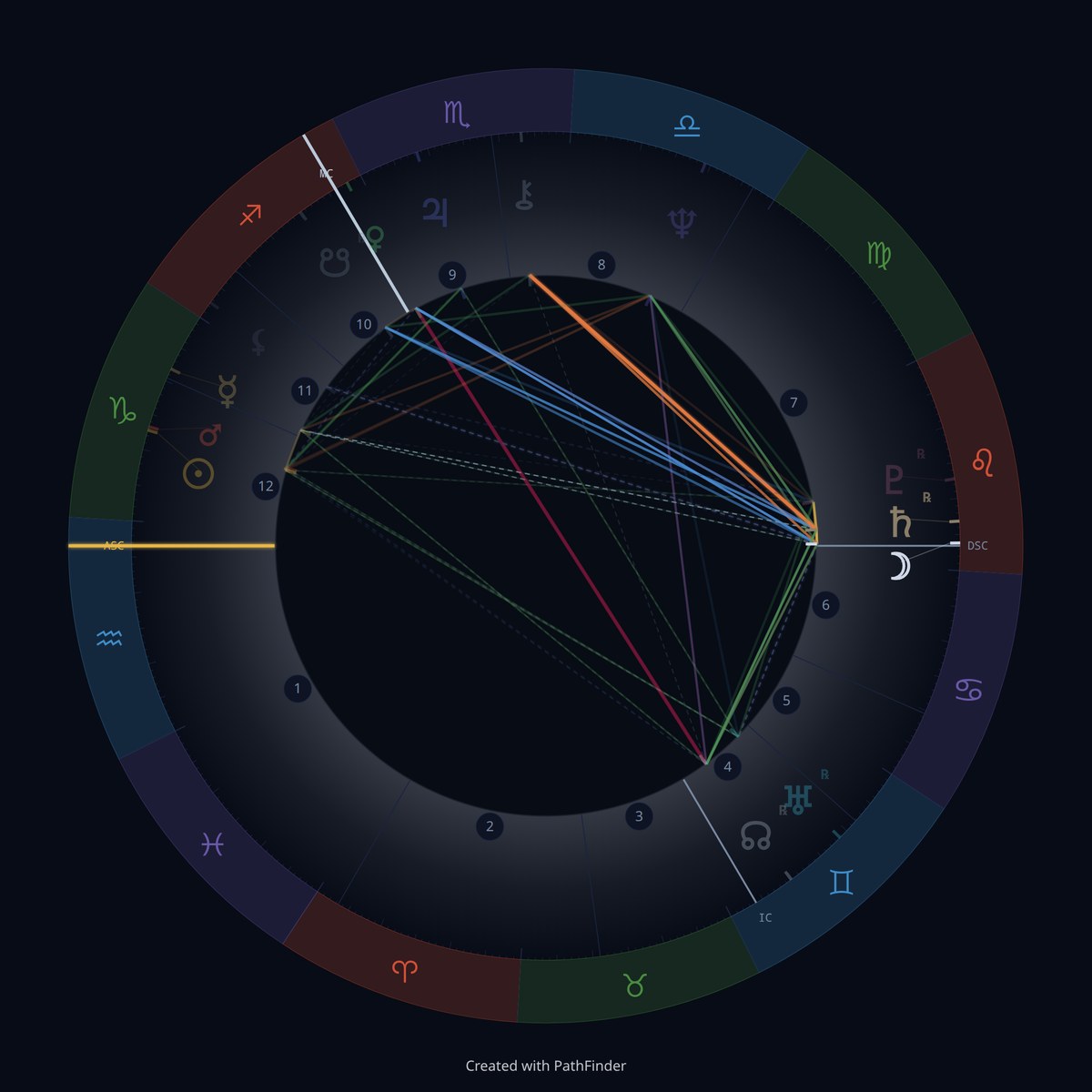
The world knew him for Neptune: the personas, the imagery, the reinvention. Underneath sat a Saturn that kept the reinvention on schedule and kept close control over his shows. Through the Moon, The Elder stayed mostly private. You see it in things like his reclusive Berlin period more than on stage.
Known For Saturn is not the same as The Elder
Two charts show how the layers differ. Richard Nixon and Audrey Hepburn both have Saturn as their Known For (Discipline and Reliability, the planet highest in the sky), and neither is The Elder. Nixon's dominant planet is Mercury, The Messenger, connected through the Ascendant. Hepburn's is Jupiter, The Sage, connected through the Midheaven. You can be known for discipline while something else drives you.
Saturn doesn't always lead alone, either. Simone de Beauvoir computes as The Disciplined Warrior, with Mars and Saturn sharing the lead through the Moon. Pairs get their own articles later in the series.
Looking at your own chart
In PathFinder, open your natal chart and find your Archetype of Realization. You'll see the name, the connection point and, if your birth time is known, your Known For label. If Saturn leads, look at which of the four points it runs through. If Saturn is your Known For but not your archetype, ask what the Saturn reputation is covering for. If it's neither, look at where Saturn touches your Sun, Moon, Ascendant or Midheaven, because that is still where structure asks something of you.
Next in the series comes another planet and another archetype. Until then, one question: where in your life did you carry weight before you felt ready, and what did you build with it?
For self-reflection and educational purposes. Astrology is not a substitute for professional advice.